MULTIFAMILYTop Security
Home Services Trespasser Removal
Service

Trespasser Removal.

Filed agreements. Posted notices. Licensed officers. Defensible documentation. Apartment-community trespass enforcement done legally, repeatably, and without the property exposure that comes from doing it wrong.

Overview

"Just call the police" is not a trespass policy.

Most apartment communities discover their trespass enforcement is paper-thin only when something bad happens. The non-resident loitering by the pool turns out to be selling drugs to a resident. The "guest" who’s been crashing on a unit floor for three months turns out to have an outstanding warrant. The ex-tenant who keeps showing up after a contentious move-out finally damages a car. In every case the property manager calls HPD — and HPD asks the same question: "Do you have a signed criminal trespass agreement on file? Are notices posted at every entrance? Have you served formal no-trespass notice on this individual?" Most of the time, the answer is no. And without those documents, the officer can’t do much more than ask the person to leave.

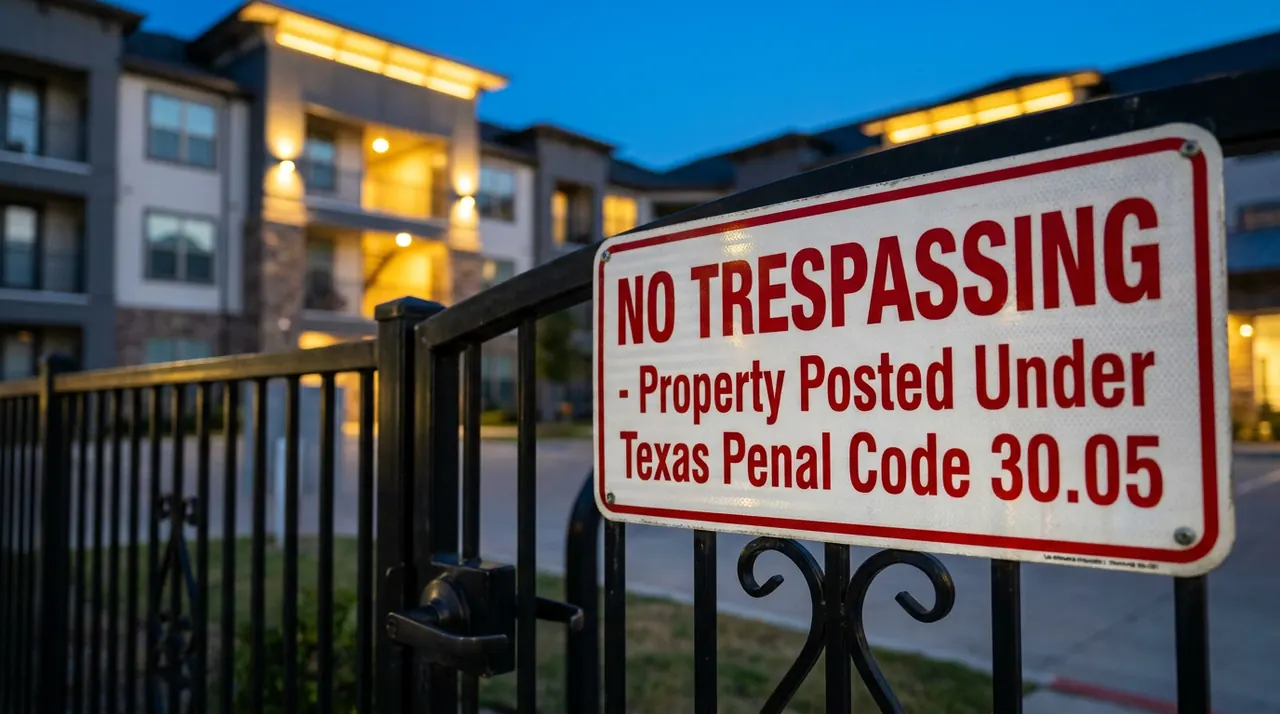
Real trespass enforcement is a paper trail before it’s a removal. The criminal trespass agreement gets filed with HPD during onboarding so officers responding to your property already know there’s authorization in place. Signage gets posted at every pedestrian and vehicle entry — and at amenity areas (pool, gym, mail) so the no-trespass status is unambiguous. Specific persons get formally trespassed via written notice handed over with body-cam footage. Once that paper exists, removal becomes simple: a licensed officer demands the person leave, documents refusal, and HPD arrests for a misdemeanor that actually sticks.

We handle the entire chain. Filing. Posting. Notice service. Officer dispatch when someone shows up. Documentation that holds in court. Property managers don’t need to learn criminal-trespass statute — that’s our job. The manager’s job is to spot the situation early and call us; ours is to make sure it’s handled the way the courts expect.

What’s Included

Filed. Posted. Enforced.

Trespass enforcement is a process — not a single phone call. Every element below is part of a working program.

HPD criminal trespass agreement.
Filed with HPD during onboarding. Officers responding to your address already see authorization on file.
Posted no-trespass signage.
Compliant signs at every entry — vehicle and pedestrian — plus amenity areas. We provide the signs; we install when needed.
Individual notice service.
Officer hand-delivers no-trespass notice to specific persons, body-cam recorded, written acknowledgment when possible.
Active-incident dispatch.
Officer on-site typically under 15 minutes for contracted properties in the Houston metro.
Body-cam & evidence package.
Every contact recorded. 90-day retention. Provided to HPD and DA on request.
Trespass-list management.
Names, photos, addresses, plates. Patrol and concierge officers brief on every shift.
HPD & DA coordination.
We submit evidence packages and coordinate with HPD on follow-through. Misdemeanors that stick.
Outreach coordination for vulnerable populations.
HPD’s homeless outreach team engaged when appropriate. Durable removal — not a sweep.
How It Works

From paper to removal in four steps.

01

Foundation

HPD trespass agreement filed. Signs posted at every entry. Property is now legally enforceable.

02

Identification

Repeat offender, ex-tenant, ex-employee, or stranger identified by patrol, concierge, or camera review.

03

Notice Served

Officer hand-delivers written no-trespass notice with body-cam evidence. Photo, plate, signed when possible.

04

Enforcement

Next appearance » lawful demand to leave » HPD arrest on refusal. Documented chain.

Pricing Model

How trespasser-removal pricing actually works.

Trespasser removal is typically bundled with patrol or response contracts rather than billed standalone. If you already contract our courtesy patrol, the trespass-enforcement program is included — agreement filing, signage, notice service, on-site response. If you want trespasser removal without ongoing patrol, we price it as a setup fee (agreement + signage + initial trespass list) plus a per-dispatch rate for active-incident response.

What shifts the rate: size of the property (more entries = more signs and more posted-notice maintenance), existing problem-list size (some properties walk in with 15 known persons to formally trespass; some with 2), and whether you need standby for homeless-encampment removal (longer-form process, sometimes multiple visits, outreach coordination).

Every assessment is free. Quotes are property-specific. The setup work is one-time; the enforcement is ongoing — we’ll show you which combination fits.

Why Multifamily-Only Matters

A trespasser at a strip mall is a stranger. A trespasser at a 240-unit community might be a resident’s ex.

Retail trespass is binary. Stranger walks in, refuses to leave, gets removed. Done. Multifamily trespass is almost never binary. The person being trespassed is usually connected to a resident — ex-boyfriend, estranged family member, dealer, former roommate, ex-tenant who used to live in the unit, a member of the resident’s extended family who’s been crashing for three weeks.

That means every trespass interaction has resident-relationship downstream consequences. Remove the wrong person and you have a domestic-violence escalation. Remove the right person poorly and you lose a lease renewal. Refuse to remove and you get sued by a different resident who witnessed the incident. The judgment is what matters — and that judgment can only come from officers who have done this hundreds of times at apartment communities, not at malls or events.

Our officers know the patterns. They know the language to use with a resident at the door explaining why their visitor can’t come back. They know how to document a domestic precursor before it becomes the incident. They know which calls go to HPD and which go to your property attorney. That’s multifamily-only expertise. It doesn’t come from a license — it comes from a decade of only doing this work.
Common Questions

Trespasser removal — the real questions.

What gives you legal authority to remove trespassers?

A signed criminal trespass agreement filed with the Houston Police Department on file at your property, combined with properly posted notices at every entry point, gives our licensed officers the legal authority to demand a trespasser leave and to detain for police arrival if they refuse. Without those two documents you have nothing — and most properties don’t realize they’re missing one or both.

What about the homeless population around the property?

We treat encampment removal as a process, not a sweep. Document the situation, post no-trespass notices, give appropriate notice when required, coordinate with HPD’s outreach team when appropriate, and remove as a last resort. The goal is durable removal — not a return three days later because we skipped the legal and humane steps.

Can a former tenant be trespassed?

Yes, once their lease has terminated and they have been served proper notice. The most common scenarios: ex-tenant returning to harass current residents, ex-tenant who was on a roommate’s lease and never had their own, or ex-tenant attempting to access amenities they no longer have a right to. We help you build the documentation correctly.

What if the trespasser claims they’re "visiting a resident"?

Officer asks for the resident’s unit number, contacts the resident directly to verify, and confirms whether the resident knows them and wants them on the property. If the resident says yes, fine — we ask them to use the front-door process going forward. If the resident says no, the visitor leaves or police are called. Body-cam captures everything, including any retroactive resident objection.

Do you handle squatter situations?

We handle the security side. Squatter removal is a legal process that goes through your property attorney and the courts — we don’t bypass that. We document the situation, provide standby during legal steps, and dispatch officers for the eviction itself if a writ is issued. See our eviction standby service for that side of the work.

How fast can you respond when a trespasser is on-site right now?

If you’re under contract, our patrol or response unit is dispatched immediately — typical Houston-area arrival is under 15 minutes. If you’re not yet under contract, we can quote and onboard fast, but for an active threat-to-life situation always call 911 first; we are not a 911 substitute.

Related Services

Most enforcement programs start with these.

Ready to start?

Build a trespass program that actually works in court.

Filing, posting, notice, response — one team, one paper trail. Free assessment shows you exactly which documents your property is missing today.