Licensed security with hospitality polish. A face residents recognize, a presence guests notice, a credential that means something. Trained for apartment communities and luxury condos — not corporate lobbies.
The front desk of an apartment community is the most-trafficked, most-misunderstood post in multifamily security. Residents want a doorman: friendly, accommodating, on a first-name basis, happy to receive a package and chat about the weather. Ownership wants a security officer: trained, credentialed, watching for trespassers and tailgaters, ready to escalate when needed. Most concierge programs pick one and lose the other. Hospitality-only firms produce officers who can’t handle a hostile guest. Security-only firms produce officers who treat every resident like a suspect. Both fail.
The correct posture is hospitality in voice, security in skill. The officer greets the resident by name and asks about their dog. Two seconds later they politely intercept the unannounced "friend of unit 412" carrying a backpack at 11pm and verify the visit before letting them up. They sign in the plumber, log the work order number, confirm the resident is expecting them, photograph the plumber’s van plate. They notice the resident’s ex-boyfriend lingering in the lobby and quietly call dispatch. None of this disrupts the experience for the actual residents. All of it gets documented.
That balance is uncommon — and it doesn’t come from a textbook. It comes from staffing officers who’ve done nothing but multifamily front-desk work for years. We rotate the same faces through your property so residents build trust. We pay above the Houston-market rate for licensed officers because the cheap ones leave in 90 days and your residents notice. The math of front-desk concierge only works if turnover is low and tenure is high.
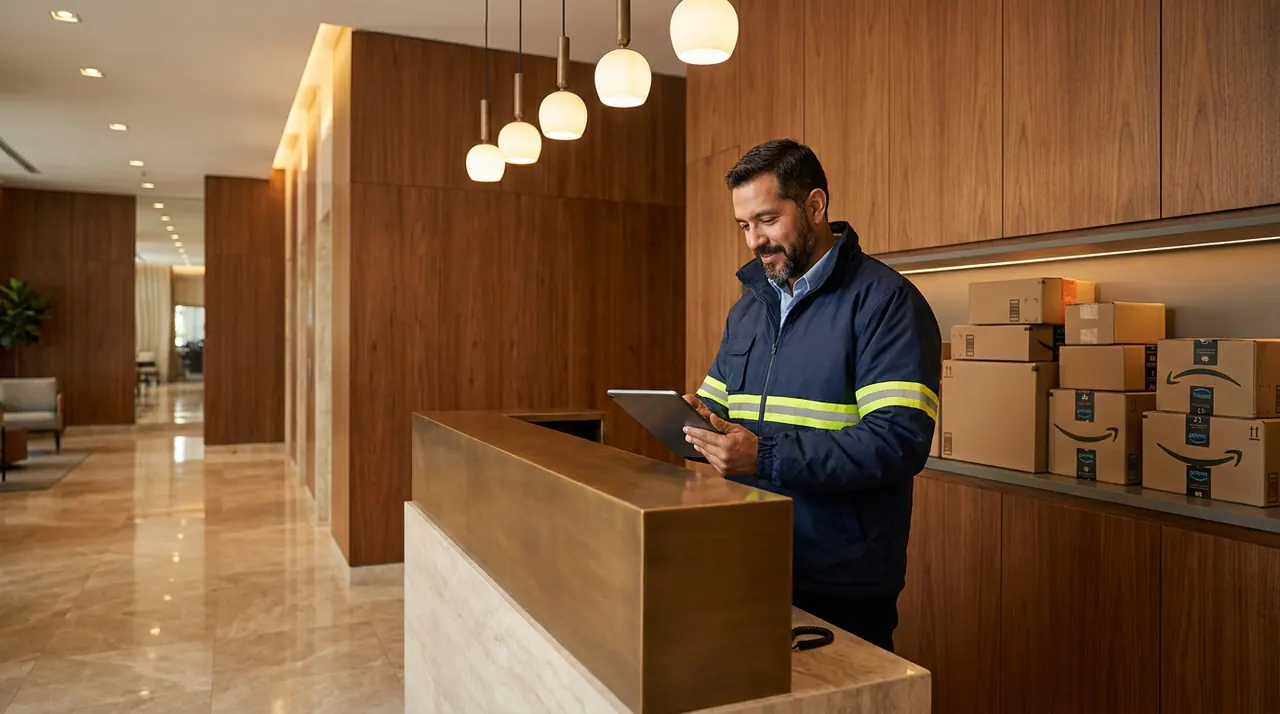
A clear scope keeps the officer from being pulled in five directions by the leasing team. We define this with your manager during onboarding.
Your manager and our supervisor define exact duties, escalation tree, and what the officer will and will not do.
We propose two or three licensed officers from our multifamily-experienced bench. You interview them. You pick.
Officer walks the property, learns regulars, reads the resident roster, learns the leasing team. First week is shadowed.
Officer on post. Monthly check-in with management. Same face for the long haul — that’s the entire model.
Concierge is priced by post-hour and officer level, the same way patrol is — but with a higher base rate that reflects hospitality training, customer-facing skill, and the lower turnover required to maintain "same face on same shift." A typical 16-hour-per-day post (one officer, 7am–11pm) on Monday–Friday is a different rate than 24/7 coverage with overnight overlap.
What shifts the rate: armed vs. unarmed (most front desks are Level II unarmed; some luxury high-rises specify Level III armed for the overnight shift), whether you want a single dedicated officer or a small rotation of three, and whether package-locker integration is part of the duties. Body cameras and reporting software are included — never billed as extras.
Every assessment is free. Quotes are property-specific. Front-desk staffing only pays off if turnover is low, so we price for tenure — not the bottom-of-market rate.
Generic concierge firms train officers on corporate-tower etiquette. Greet professionals, sign in visitors, escort to elevator. The mental model is "guests come and go on a 9-to-5 schedule." That model breaks the second the officer is dropped into a 280-unit Galleria community at 6pm on a Friday with a leasing tour walking in, four package couriers stacking up, the maintenance team needing the storage room key, and a resident locked out asking why the after-hours line goes to voicemail.
Our officers are trained on the actual social dynamics of a multifamily community: package-pickup peak times, leasing-tour interrupts, who’s allowed to enter without sign-in (the resident in pajamas at 2am), who isn’t (the person claiming to be the resident’s cousin), the polite verification script that doesn’t make a returning resident feel suspected. They know that the mother visiting her son for the holidays should not be made to feel like she’s entering a federal building.
That nuance is what keeps lease renewals up. A concierge officer trained on retail or corporate scripts will make residents feel watched. A concierge officer trained on multifamily makes residents feel safer at home. The difference is your renewal rate — and it doesn’t come from a one-week training course.
No. A doorman is hospitality. A concierge officer is licensed security with hospitality polish. They greet residents the same way — but they verify guests, log deliveries, manage incidents, and respond to emergencies. The uniform and tone are warmer; the credentials and training are not softer.
Anything from a single evening shift to 24/7. Most apartment-community contracts run 16-hour coverage (7am–11pm) which catches the highest-traffic windows. Luxury high-rises typically run 24/7 with overnight coverage by a single officer. Weekend-only and event-only coverage are also options.
Yes — sign-in, secure-hold, resident notification, and photo log on every package. We work with Luxer One, Package Concierge, and locker systems if you have them, and run a manual package room if you don’t. Package theft is the most common resident complaint at multifamily properties, and this one duty alone often justifies the post.
Within scope — verifying ID, signing the prospect in, calling the leasing agent, holding for a tour. We do not show units or quote rents — that stays with your leasing team. We can also help screen suspicious "prospects" (the ones casing the property) which protects your staff and your residents.
De-escalation first, dispatch second, documentation always. Our officers carry body cameras and are trained on resident-specific de-escalation — not retail loss-prevention scripts. Wrong tone with a resident costs you a lease renewal. We escalate to patrol or HPD when the situation genuinely requires it — not before.
We document, we contain, we call when required. We don’t take sides in lease or HOA disputes — that’s management’s job. We make sure no one gets hurt and everything is recorded for management’s review the next morning. Body-cam footage of a noise complaint is often the difference between a he-said-she-said and a clear write-up.
Concierge handles the lobby. Patrol handles the perimeter and overnight rounds.
ExploreThe officer enforces the system. PMS integration prevents the manual mistakes.
ExploreWhen the lobby officer needs backup — vehicle and Level III armed support en route.
ExploreInterview the officer before they post. Same face every shift. Multifamily-trained from day one.